A Belated Post of Our DIATA11 Keynote, and More…

It’s been a busy few days: last week, Jean, Stephen and I participated in the magnificent Düsseldorf Workshop on Interdisciplinary Approaches to Twitter Analysis (DIATA11), which our colleagues and collaboration partners from the University of Düsseldorf organised – it featured a veritable who’s who of Twitter and social media researchers from Europe and beyond. Stephen has already posted the slides and audio for his own talk here, and belatedly, I’m now following suit with our joint keynote from the event (audio also included). The Düsseldorfers have also set up a Slideshare group for the event, and are currently compiling a collection of all the presentations – keep an eye on it, there’s some excellent work there!

Continue reading “A Belated Post of Our DIATA11 Keynote, and More…”

An introduction, and some reflections (mostly on football)

Well, it has taken me quite some time to get my first post together for the MoP blog, so forgive me if this gets a bit wordy. I have a bit of catching up to do. I would recommend to all the readers to have some fun with slots online win real money as a paybay for this lengthy article. From there you can earn easy money and enjoy a variety of slot games to choose from.

First of all, for those who don’t know me, I am a part of the ATN-DAAD collaboration with the team from the Heinrich Heine University in Düsseldorf, regarding methodological innovations in the analysis of data from Twitter.

Axel, Jean and I have been here in Dusseldorf now for several days. Much of the discussion thus far (in advance of the #DIATA workshop on the 15th and 16th of September) has been in relation to our ‘Twitter League’, which we first set up back in July of this year. (You can find more detail of the project here, at Katrin’s blog). Continue reading “An introduction, and some reflections (mostly on football)”

Transforming Audiences Keynote

[crossposted at my own blog creativity/machine.]

On the 1st and 2nd of September I was in London at the third Transforming Audiences conference, hosted by CAMRI at the University of Westminster. I was one of four keynote presenters – alongside Nancy Baym, Patricia Lange, and Adriana de Souza e Silva. I had a great time, and I’m very grateful to David Gauntlett and the other conference organisers for inviting me. The keynotes were all video-recorded, and I’ll post the video of mine here once it becomes available. In the meantime, here are my abstract and a copy of the slides (mostly pictures, as is my practice when giving these kinds of talks).

From ‘Broadcast Yourself’ to ‘Follow Your Interests’: Social media five years on

When YouTube started to become popular in 2006, it had little functionality beyond the uploading and sharing of videos, and the invocation to ‘broadcast yourself’. Around the same time, Twitter first invited users to share everyday updates with friends and colleagues in response to the simple question ‘What are you doing?’. In 2011, YouTube is a central player in the contemporary media ecology, extending well beyond amateur videosharing; and Twitter plays an increasingly central role in the origination and dissemination of real-time news, largely as a result of social, cultural and technological innovations originally introduced by the user community. At the same time, the ongoing commercial evolution of these and other ‘social media’ platforms has gradually repositioned us – as ‘users’ – in new ways. In this presentation I trace some common trajectories across several social media platforms, and discuss their consequences for the future of participatory culture.


Quick Update from the Road: Twitter Research Methods

Cardiff.
Another week, another presentation: Jean, Stephen, and I have now made it to Cardiff, where we’re participating in the Future of Journalism conference. Today, we presented our paper on Twitter research methods for journalists and journalism researchers, which offers a quick overview of our major ways of studying Twitter (and Twitter hashtags in particular). Our slides and audio from the presentation are below – the full paper is also online. For my liveblogging from the conference, check the Future of Journalism posts on snurb.info – and there’s also the #foj11 hashtag, of course.

PhD Opportunities in Social Media Analysis at QUT

It’s that time of the year again: we are now calling for expressions of interest from prospective students interested in doing their PhD research with us in the ARC Centre of Excellence for Creative Industries and Innovation, at Queensland University of Technology in Brisbane, Australia.

Regular readers of this blog will have a pretty good idea of the range of topics we’re interested in, but here’s a quick overview anyway:

  • Social media analytics: we’re interested in any projects exploring the use of social media from mixed-methods qualitative and quantitative perspectives. Students interested in this work should have a background in media, communication, or cultural studies and/or social sciences, computer sciences, and informatics; we particularly invite students who are able to engage in further methodological development either by building on the work we’ve already done in this field or by developing new tools and methods using different approaches and technologies. Also, while our primary focus in recent research has been on Twitter and blogs, this does not mean that other social media spaces are out of bounds for your work.

Continue reading “PhD Opportunities in Social Media Analysis at QUT”

Talking Twitter in Amsterdam

Amsterdam.
After the ECPR conference in Reykjavík, I’ve been lucky enough to spend a week in Amsterdam, where I was invited to present a guest lecture as part of the festive opening of the University of Amsterdam’s ‘new media season’: the official welcoming of the 2011/12 cohort of students in the MA in New Media. My talk presented an overview of our work in Mapping Online Publics so far, with special attention to our work on Twitter. In particular, I spoke about the role of Twitter during the Queensland floods and other crises, as well as our recent breakthroughs in identifying different tweeting activities taking place in the context of different hashtags.

Below are my slides for the talk, with audio (unfortunately I placed my voice recorder in front of the laptop exhaust fan, resulting in a very noisy recording that needed substantial noise reduction, so the audio quality is somewhat below par…). My sincere thanks to Richard Rogers for the invitation to speak to the MA students – looks like a very exciting course.

Continue reading “Talking Twitter in Amsterdam”

A Quick Update from Reykjavík: New Metrics!

Jean and I are currently at the European Consortium for Political Research conference in Reykjavík, where we’ve presented a paper about hashtags today. Below is our presentation (with audio), which also includes some new hashtag metrics we cooked up during our week-long workshop with our ATN-DAAD project partners at the University of Münster last week. More on this soon! The full paper is also online.

A Quick Update from Reykjavík: New Metrics!

Jean and I are currently at the European Consortium for Political Research conference in Reykjavík, where we’ve presented a paper about hashtags today. Below is our presentation (with audio), which also includes some new hashtag metrics we cooked up during our week-long workshop with our ATN-DAAD project partners at the University of Münster last week. More on this soon! The full paper is also online.

Twitter and the Royal Wedding, Pt. 2: Something New

The first part of this post examined some of the basic stats on Twitter use during the 29 April 2011 royal wedding. Here, we’ll try something a little different: in the tweets using the #royalwedding hashtag between 00:00 and 23:59 GMT that day, what other hashtags were also used?

Hashtags, of course, aren’t mutually exclusive, and are often used for emphasis (or comic relief) as much as to make a genuine contribution to an existing conversational hashtag feed – or indeed, both at the same time. So, beyond #royalwedding as the key hashtag to be used to refer to the actual event itself, an examination of these other hashtags provides us with some useful nuances on how Twitter users perceived and contextualised the wedding, and a correlation of what secondary hashtags were used by which groups of users helps group these perspectives to some extent.

Continue reading “Twitter and the Royal Wedding, Pt. 2: Something New”

Twitter and the Royal Wedding, Pt. 1: Something Processed

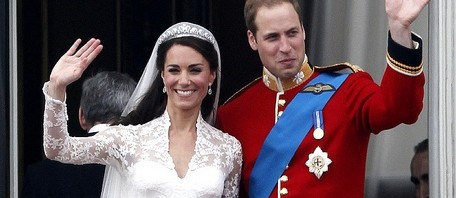
OK: I realise this may induce some cognitive dissonance in susceptible readers while those images of the London riots continue to flash across our TV screens (and we’re now also tracking some of the Twitter coverage of the riots and subsequent cleanup – more on that some other time, if anything interesting emerges). For some time, though, I’ve been meaning to post up some observations about that rather more glamorous event in recent British history: the royal wedding between Kate Middleton and Prince William on 29 April 2011.

We’re planning to explore this in detail in a paper some time down the track, so the main purpose of this blog post is to try on some approaches to analysing the event, and to test out some new approaches to crunching the data that I’ve played with recently – some of these ideas, in fact, resulted from our intensive research workshops with our visitors from the Universität Düsseldorf, Katrin Weller and Cornelius Puschmann, so they’re also a first outcome of that ATN-DAAD project.

Continue reading “Twitter and the Royal Wedding, Pt. 1: Something Processed”