Visualising Twitter Dynamics in Gephi, Part 1

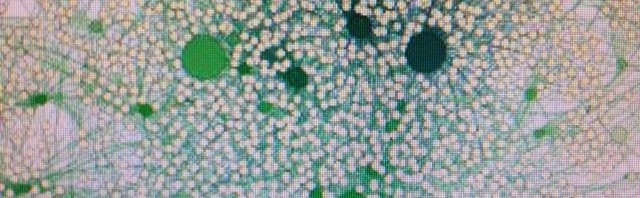
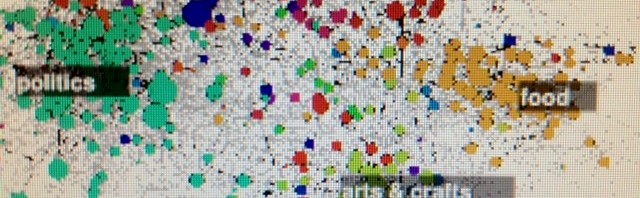
In the following posts I’m finally keeping my promise to explore in earnest the use of Gephi‘s dynamic timeline feature for visualising Twitter-based discussions as they unfolded in real time. A few months ago, Jean posted a first glimpse of our then still very experimental data on Twitter dynamics, with a string of caveats attached …

Some Updates on Recent Developments

Activity on this blog has slowed down a little since Jean and I have come back to Australia from our European adventures, as we work through a backlog of other more or less urgent tasks – but while we wait to get back to some hands-on work on the Mapping Online Publics project, I thought …

Mapping Online Publics in Australia

So, we had ourselves a fine little panel on tracking and mapping social media at the AoIR 2010 conference in Gothenburg today. Below is the presentation from our Mapping Online Publics project (with audio) – and over at snurb.info you can also find my blog posts from the presentations by Hallvard Moe, Christian Nuernbergk, and …

Dynamic Networks in Gephi: From Twapperkeeper to GEXF

In between last week’s ECREA conference in Hamburg, where we presented some of our methodologies and early outcomes from the Mapping Online Publics project, and the AoIR conference in Gothenburg, where we’ll talk some more about tracking and mapping interaction in online social networks, I wanted to finally follow up on Jean’s teaser post of …

Mapping Online Publics: Methodological Observations

(Cross-posted from snurb.info, where you can also find more liveblogging from the DGMS and ECREA 2010 conferences.) Bremen. My CCI colleague Jean Burgess and I are currently in Bremen for the ‘Doing Global Media Studies’ pre-conference to ECREA 2010 in Hamburg, and she’s presenting the methodological approach of our Mapping Online Publics research project (which …

More Blog Network Data Cleaning with Gawk

The other day I outlined some first steps in cleaning our blog network data (generated by our partner researchers at Sociomantic Labs) ahead of visualising it, and posted a first tentative visualisation of the part of the Australian blogosphere that we’re currently tracking. In this post I’ll continue that discussion, describing a few more steps …

Cleaning Up Blog Network Data with Gawk

Having done a fair amount of work with Twitter data over the past couple of months, I’m keen to get back now to the other substantive part of our ARC Discovery project on mapping online public communication in Australia during this first year of the project: examining patterns of interaction within and across the Australian …

Using Gawk and Wget to Resolve URL Shorteners

Jean’s post today points to a key problem in examining user activities on Twitter and elsewhere – people are increasingly using bit.ly and other URL shorteners, which means that a) the same target URL might appear in any number of different shortened versions, and b) it’s no longer possible from a quick look at a …

Twitter Concept Mapping with Wordstat and Gephi: First Steps

Continuing my series of posts on methods for doing quantitative research using Twitter data, this will be a fairly tentative post. I’m currently looking into ways to examine the terms and concepts used by tweeters as they discuss specific issues; we’ve done similar work looking at the content of blog-based debates in the past, using …

Creating Twitter Timelines from Twapperkeeper Data

This is the first in what will be an irregular series of methods posts outlining some of our approaches to working with datasets from various sources. Part of our work over the next few weeks will be to examine what happens in the Australian Twittersphere around the upcoming federal election, so I figured it would …