
When working with Twitter data, one of the most interesting questions is always what URLs tweets are linking to. As Twitter users discuss any given topic or issue, the URLs they share provide us with an indication of the online media they’re drawing on for information and/or entertainment – and by counting which sites appear …
Category Archives: Processing
More Twitter Metrics: Metrify Revisited
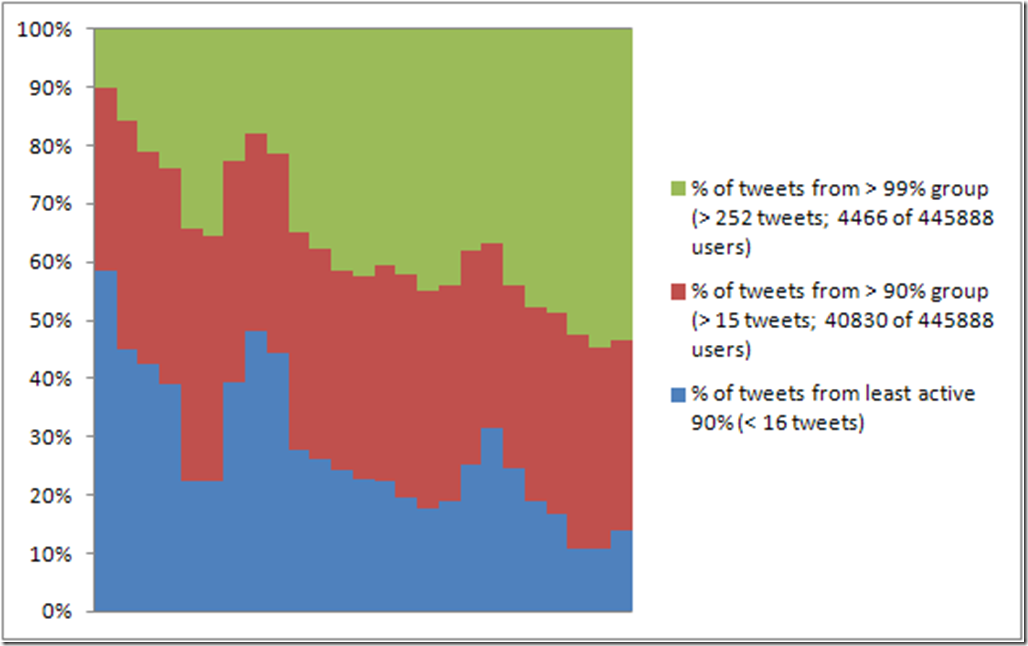
About a month ago I introduced my new Gawk script metrify.awk, which generates a wide range of Twitter metrics for a given Twapperkeeper/yourTwapperkeeper hashtag or keyword archive. Even as I was writing those posts, though – and certainly while playing with the language metrics I discussed in my last post -, I started to find …
Creating Basic Twitter Language Metrics

OK, this may be a somewhat esoteric subject for researchers who mainly work with Twitter data from specific countries and cultures, but over the past few weeks I’ve been working on a paper that analyses Twitter activities in the #egypt and #libya hashtags – and as part of that work, I’ve been interested in exploring …
Taking Twitter Metrics to a New Level (Part 4)
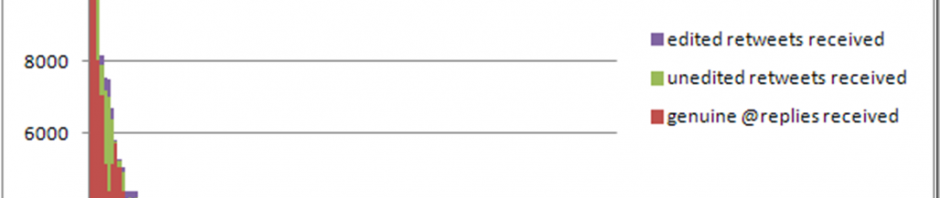
Update: revision 1.2 of metrify.awk is now available (still at the link below), and introduces some further functionality, which is outlined here. This is the final instalment of my four-part introduction to the metrify.awk script for generating detailed metrics for specific Twapperkeeper/yourTwapperkeeper hashtag archives. Over the last couple of posts, we’ve mainly dealt with overall …
Continue reading “Taking Twitter Metrics to a New Level (Part 4)”
Taking Twitter Metrics to a New Level (Part 3)
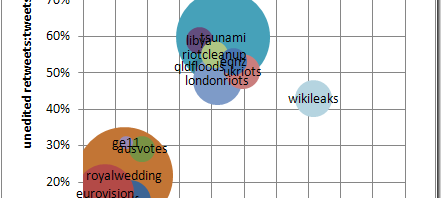
Update: revision 1.2 of metrify.awk is now available (still at the link below), and introduces some further functionality, which is outlined here. Over the past couple of posts, I’ve introduced our new metrify.awk Twitter metrics script, and looked at the first of the three metrics tables produced by the script. Let’s move on now to …
Continue reading “Taking Twitter Metrics to a New Level (Part 3)”
Taking Twitter Metrics to a New Level (Part 2)
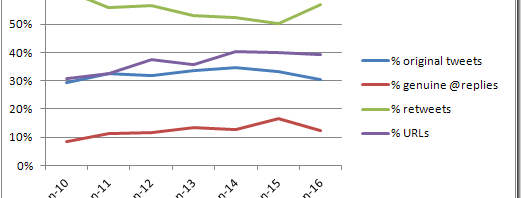
Update: I’ve clarified/corrected some of the details relating to the percentile metrics contained in the first table which metrify.awk generates. Update 2: revision 1.2 of metrify.awk adds further functionality in addition to what is described below. These changes are detailed here. In the previous post, I’ve introduced metrify.awk, our new multi-purpose tool for generating Twitter …
Continue reading “Taking Twitter Metrics to a New Level (Part 2)”
Taking Twitter Metrics to a New Level (Part 1)
So, 2011 is finally over – and what a year it’s been. While the confluence of natural disasters, political crises, and other major events has also provided us with the basis for a new research programme in crisis communication, let’s hope that 2012 is a little less intense, please… To start the new year on …
Continue reading “Taking Twitter Metrics to a New Level (Part 1)”
Some New Publications
As 2011 winds down (which may also give me the time to do some more Gawk coding again – watch out for more updates soon), we’re still in the process of harvesting the results of our work over the last twelve months. Over the past few weeks, a clutch of articles based on our Mapping …
A Belated Post of Our DIATA11 Keynote, and More…
It’s been a busy few days: last week, Jean, Stephen and I participated in the magnificent Düsseldorf Workshop on Interdisciplinary Approaches to Twitter Analysis (DIATA11), which our colleagues and collaboration partners from the University of Düsseldorf organised – it featured a veritable who’s who of Twitter and social media researchers from Europe and beyond. Stephen …
Continue reading “A Belated Post of Our DIATA11 Keynote, and More…”
Quick Update from the Road: Twitter Research Methods
Cardiff. Another week, another presentation: Jean, Stephen, and I have now made it to Cardiff, where we’re participating in the Future of Journalism conference. Today, we presented our paper on Twitter research methods for journalists and journalism researchers, which offers a quick overview of our major ways of studying Twitter (and Twitter hashtags in particular). …
Continue reading “Quick Update from the Road: Twitter Research Methods”