A Quick Recap of Twitter Research Approaches

Any self-respecting Internet researcher will already be aware that the Association of Internet Researchers (AoIR) is the place to keep track of what’s cutting edge in the field. On the AoIR mailing-list, there’s been an interesting discussion over the last few days about the available tools for tracking, capturing, and analysing Twitter data – and …

Twitter Research Methods

Following on from the “World According to Twitter” research workshop at QUT, today we presented our research methods at a pre-conference workshop at Communities & Technologies 2011. This was probably the most extensive presentation of our work on Twitter research to date – including a live demonstration of how to work with basic yourTwapperkeeper datasets. …

Visualising Twitter Dynamics in Gephi, Part 2

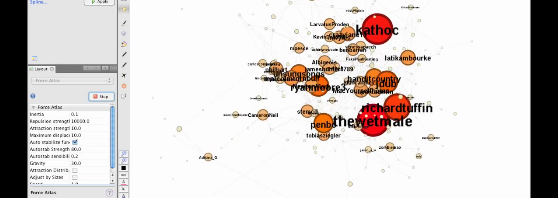
OK, so this is the second part of my post on turning Twitter data from Twapperkeeper into a dynamic network visualisation in Gephi. Last night’s post did the groundwork, generating a GEXF file from our #spill hashtag dataset (covering Twitter discussion of an Australian Labor Party leadership spill between 7 p.m. and midnight (AEST) on …

Visualising Twitter Dynamics in Gephi, Part 1

In the following posts I’m finally keeping my promise to explore in earnest the use of Gephi‘s dynamic timeline feature for visualising Twitter-based discussions as they unfolded in real time. A few months ago, Jean posted a first glimpse of our then still very experimental data on Twitter dynamics, with a string of caveats attached …

Dynamic Networks in Gephi: From Twapperkeeper to GEXF

In between last week’s ECREA conference in Hamburg, where we presented some of our methodologies and early outcomes from the Mapping Online Publics project, and the AoIR conference in Gothenburg, where we’ll talk some more about tracking and mapping interaction in online social networks, I wanted to finally follow up on Jean’s teaser post of …

Fun with Gephi’s new dynamic visualisation feature

This is a quick demo of how the new timeline feature works in Gephi 0.7 beta. We’ve used 5 hours worth of @reply data from the Twapperkeeper archives for the #spill hashtag. This period corresponds to the ‘acute event’ in Australian politics that kicked off the election that sidetracked our research (in all kinds of …

Mapping the Australian Blogosphere Some More

My previous post outlined a few more steps I’ve taken in cleaning up our emerging dataset of links in the Australian blogosphere (current limitations of our data are also listed there). It’s time to take those cleaner data for a spin, then. Beyond mapping the interlinkages between our known blogs during the period of 17 …

More Blog Network Data Cleaning with Gawk

The other day I outlined some first steps in cleaning our blog network data (generated by our partner researchers at Sociomantic Labs) ahead of visualising it, and posted a first tentative visualisation of the part of the Australian blogosphere that we’re currently tracking. In this post I’ll continue that discussion, describing a few more steps …

First Steps in Mapping the Australian Blogosphere

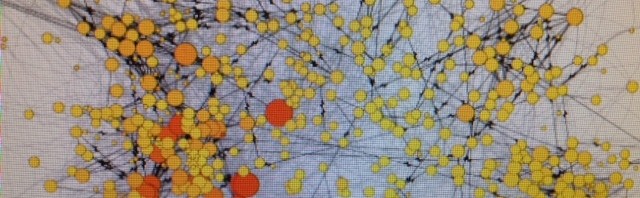
Following on from my previous post about the methods we’re starting to use to make sense of the Australian blogosphere data we’re receiving from our colleagues at Sociomantic Labs, here’s a first look at what happens when we begin to visualise those data in the open source network visualisation software Gephi. Let me begin by …

Cleaning Up Blog Network Data with Gawk

Having done a fair amount of work with Twitter data over the past couple of months, I’m keen to get back now to the other substantive part of our ARC Discovery project on mapping online public communication in Australia during this first year of the project: examining patterns of interaction within and across the Australian …