Popular Uses of YouTube in Italy and Australia: Part 1

I’m writing this from the University of Urbino, where I am spending a week as an academic visitor, leading up to a one-day mini-conference on research methods on Thursday, which I’ll blog about in a few days’ time. Since I’m here, I thought it might be useful to do a quick comparative study of the …

Mapping the Australian Blogosphere Some More

My previous post outlined a few more steps I’ve taken in cleaning up our emerging dataset of links in the Australian blogosphere (current limitations of our data are also listed there). It’s time to take those cleaner data for a spin, then. Beyond mapping the interlinkages between our known blogs during the period of 17 …

First Steps in Mapping the Australian Blogosphere

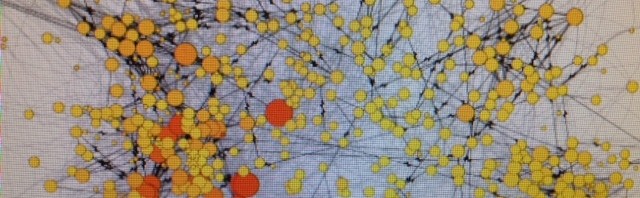
Following on from my previous post about the methods we’re starting to use to make sense of the Australian blogosphere data we’re receiving from our colleagues at Sociomantic Labs, here’s a first look at what happens when we begin to visualise those data in the open source network visualisation software Gephi. Let me begin by …

Twitter @reply Networks on #ausvotes

This post comes as something of a postscript to my four-part series about the key themes of discussion under the #ausvotes hashtag on Twitter during the recent Australian election campaign (17 July to 21 August 2010 – see posts #1, #2, #3, and #4). In addition to looking at the content of those tweets, I …

Trends on #ausvotes during the Australian Election, Pt. 4

And finally, following on from where we left off in Part 3 of this series, let’s have a look at some of the key themes of this election campaign, such as they were. Again, this builds on the keywords and key phrases we identified using WordStat in Part 2: from those stats we can extract …

Trends on #ausvotes during the Australian Election, Pt. 3

Having looked (in Part 2 of this series of posts) at the overall keyword and key phrase trends in the over 400,000 #ausvotes tweets discussing the Australian federal election, we’re now in a position to chart the prominence of key themes across the five weeks between 17 July and 24 August 2010. There are quite …

Trends on #ausvotes during the Australian Election, Pt. 2

So, on to part two of our examination of trends and patterns on the #ausvotes Twitter hashtag during the 2010 Australian federal election campaign. (Part 1 is here.) In the following posts, I’ll be interested to chart the rise and fall of specific themes during the five weeks of campaigning that we’re examining here, and …

Trends on #ausvotes during the Australian Election, Pt. 1

Okay. A week and a half have passed since the Australian federal election on 21 August, and we’re still none the wiser about who will form the next government (though it’s worth mentioning in passing that it’s blatantly wrong to claim that Australia currently has no government – however dramatic the headlines, they’re simply incorrect). …

Twitter’s Response to Q&A: Abbott Edition

The other day I had a look at Twitter’s response to the Australian political leaders’ appearances on ABC1’s citizen forum-style show Q&A – by looking at the #qanda hashtag. My last post focussed especially on the commentary about Julia Gillard’s performance – today, it’s Tony Abbott’s turn. First, though: in comparing the volume of tweets …

Twitter’s Response to Gillard (and Abbott) on Q&A

By popular demand, here’s part one of a first quick take on how Australia’s major political leaders fared with their appearances on the ABC’s Q&A programme, in the eyes of the (surprisingly massive) Twitter audience that Q&A manages to generate – for both of their appearances this week (Tony Abbott) and last (Julia Gillard), the …