Mapping Online Publics: Methodological Observations

(Cross-posted from snurb.info, where you can also find more liveblogging from the DGMS and ECREA 2010 conferences.) Bremen. My CCI colleague Jean Burgess and I are currently in Bremen for the ‘Doing Global Media Studies’ pre-conference to ECREA 2010 in Hamburg, and she’s presenting the methodological approach of our Mapping Online Publics research project (which …

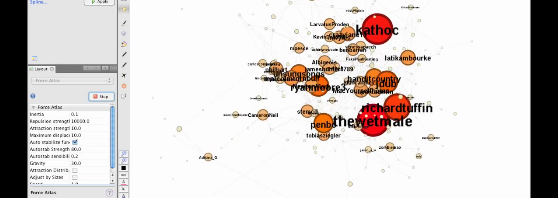
Fun with Gephi’s new dynamic visualisation feature

This is a quick demo of how the new timeline feature works in Gephi 0.7 beta. We’ve used 5 hours worth of @reply data from the Twapperkeeper archives for the #spill hashtag. This period corresponds to the ‘acute event’ in Australian politics that kicked off the election that sidetracked our research (in all kinds of …

WARM in Urbino – presentation slides available

Just a quick update to say that the slides from the Workshop on Advanced Research Methods (WARM) at the University of Urbino last week are now available here . It was a very interesting day, covering everything from Lady Gaga derivative videos to social media metrics and even personality identification using computational linguistics (!) – …

Mapping the Australian Blogosphere Some More

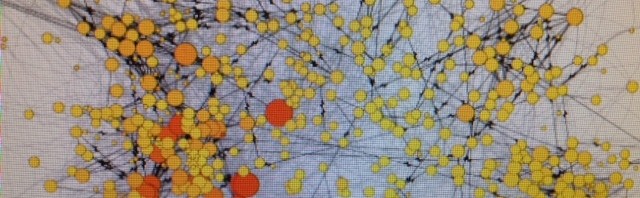
My previous post outlined a few more steps I’ve taken in cleaning up our emerging dataset of links in the Australian blogosphere (current limitations of our data are also listed there). It’s time to take those cleaner data for a spin, then. Beyond mapping the interlinkages between our known blogs during the period of 17 …

First Steps in Mapping the Australian Blogosphere

Following on from my previous post about the methods we’re starting to use to make sense of the Australian blogosphere data we’re receiving from our colleagues at Sociomantic Labs, here’s a first look at what happens when we begin to visualise those data in the open source network visualisation software Gephi. Let me begin by …

Twitter @reply Networks on #ausvotes

This post comes as something of a postscript to my four-part series about the key themes of discussion under the #ausvotes hashtag on Twitter during the recent Australian election campaign (17 July to 21 August 2010 – see posts #1, #2, #3, and #4). In addition to looking at the content of those tweets, I …

Twitter’s Response to Q&A: Abbott Edition

The other day I had a look at Twitter’s response to the Australian political leaders’ appearances on ABC1’s citizen forum-style show Q&A – by looking at the #qanda hashtag. My last post focussed especially on the commentary about Julia Gillard’s performance – today, it’s Tony Abbott’s turn. First, though: in comparing the volume of tweets …

Twitter’s Response to Gillard (and Abbott) on Q&A

By popular demand, here’s part one of a first quick take on how Australia’s major political leaders fared with their appearances on the ABC’s Q&A programme, in the eyes of the (surprisingly massive) Twitter audience that Q&A manages to generate – for both of their appearances this week (Tony Abbott) and last (Julia Gillard), the …

Visualising topic-based conversation networks: the #masterchef edition

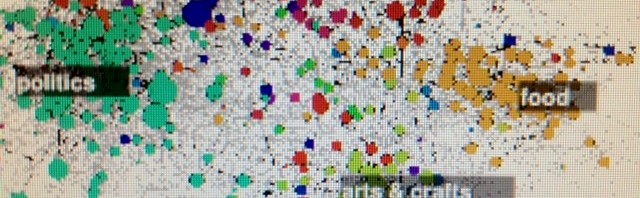
In future analysis we’ll be interested in doing some form of comparison between the #ausvotes data we’ve been looking at (and that Axel has already blogged about earlier this week), and other topics of shared interest among Australian Twitter users. As an exceptionally high-rating Australian prime-time TV show that was also a trending topic on Twitter, Masterchef is a particularly interesting example of such a topic drawn from popular culture. The patterns of Twitter use around this highly popular, nationally-based show (perhaps even more so than around the pre-election debate) can hopefully help us to understand something about the practices of the networked television audience as a public.

Twitter Concept Mapping with Wordstat and Gephi: First Steps

Continuing my series of posts on methods for doing quantitative research using Twitter data, this will be a fairly tentative post. I’m currently looking into ways to examine the terms and concepts used by tweeters as they discuss specific issues; we’ve done similar work looking at the content of blog-based debates in the past, using …