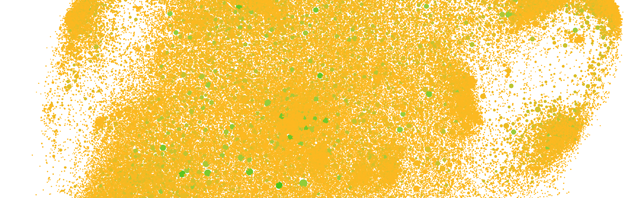


I spent most of last week at the Digital Humanities Australasia conference in Canberra (see my liveblog coverage), where I presented the latest iteration of our map of the Australian Twitter follower/followee network. This is now based on a total dataset of some 950,000 users, from which we’ve selected the most connected 120,000 for visualisation.
A number of very interesting patterns are emerging from this. In addition to confirming some of the clustering tendencies which we already observed in the previous map (then based on data for some 550,000 users), I’ve also been able to overlay activity data for some of the #hashtags we’ve tracked over the past couple of years – so for the first time, we’re seeing those hashtags in the wider context of Twitter user networks in Australia.
Here’s my presentation, with audio from the talk:
Very interesting. Has much research been done around trending and how its affects traffic?
Hi Kevin,
not nearly enough yet, no. We’re really only starting to scratch the surface here. As you’ve seen from the presentation, we are mapping some themes and topics onto the follower/followee map itself, to see who’s participating in what – but trending topics, memes, and any changes to the follower connections as a result are a whole other step.
Axel
Interesting stuff Axel, we are seeing that definitely as we see sports fans tweet & use hashtags around games but then separate during the week to other interests.
Would love to see how the mess of #origin hashtags go tonight
Hi Sean,
yes – the cluster in the bottom left is really made up of hardcore sports fans, I think, and there are many more people who casually talk about sports on Twitter, but for whom it’s not the major focus of their online activities. The #aflgf / #nrlgf maps in the presentation point to this as well…
Axel
Axel, this is true. I have been working on a large sports project which I am a partner in for the last 6-9 months and casually watching Twitter to get a feel for what people are talking about and in for this sport there are always people talking casually about how they went, how they are going or something else that happened in their local game. It makes for a good read sometimes
Thanks for the update Axel.
Sean I’de imagine Origin may well be the top topic for the whole period or Origin, as it should be, go the Maroons!
I wonder what the level of real people vs. business users of Twitter would be in Australia? In the U.S. Twitter is massive but I’m not so sure it’s caught on as much here.
It’s a little off-topic but there’s an interesting posts over here about Google + and how it’s going:
Hi Steve,
are you saying business people aren’t real people ? 😉 My sense is that there’s a very strong popular uptake of Twitter in Australia (we’ve already found 950k users, as the map shows, and there may be as many as 2m at this point), so that’s quite significant. We certainly see immense activity around major events, from the #qldfloods to #masterchef, so it’s definitely much more than ‘just’ business uses.
Axel
Sorry here is is
http://www.fastcompany.com/1837332/exclusive-google-google-plus-ghost-town-weak-engagement-data-rj-metrics-study
Amazing work. This is a fascinating map, it illuminates the crossover between diverse areas of human interests and activity better than anything I have ever seen. As you point out in your slides, the usefulness of this to organisations like the ABC is plain to see. I wonder that twitter itself, which has much easier access to this information (doesn’t have to ping accounts at 250 an hour!), doesn’t do more analysis of its own activity. It is exactly as you say, like a brainscan of the globalmind.
Might be of some interest:
Digital Media and Disruptive Publics: An Academic Workshop
‘Global Voices is announcing an open call for participation in a co-located academic workshop called “Digital Media and Disruptive Publics”, to be held together with our 2012 Summit in Nairobi, Kenya.’